Even lo-fi experiment sketches make sense when you map the business first
Five volunteers, put on the spot as a fictional company's leadership team at the Canterbury AI Meetup, sketched two connected experiments in fifteen minutes – because they were working from a map.
At the September Canterbury AI Meetup, five volunteers stepped up as the leadership team of Morrow & Main – a fictional NZ provincial home-improvement retailer, doing badly right now and facing an even harder few years ahead. Each took a real role – CEO, Head of People & Culture, Head of Technology, Head of Customer & Commerce, Head of Operations – and in fifteen minutes, working genuinely collaboratively from those individual perspectives, they designed two AI experiments the business could actually run.
What made it work is that I documented what they were building directly onto a map of the business in its 2027 context, challenges and all, as they built it. So an idea from Technology didn’t stay stuck in Technology’s point of view – you could see, in real time, how it had to connect to what Customer & Commerce or People & Culture were proposing. Not finished experiments – but a useful record of real progress.
That progress rested on steps the room had already taken. We’d already walked through the moving parts of the business, its backstory, and where it stands today. A key part of that map is its environment: the conditions outside the business’s own control. So when the wider audience supplied ideas about how that environment was likely to shift between now and 2027 – global chains, fuel and supply costs, a nervous but AI-hungry workforce – I documented those live onto a 2027 scenario map. That map, environment and all, became the template the leadership team designed both experiments against.
The two experiments aren’t the same kind of bet. “Customer First” is a genuine shift in business model – back to the old, personal, in-home service Morrow & Main was built on, but with AI now keeping it responsive to incidents in real time in a way the original model never was. That’s something even a global chain with Walmart-scale reach and fulfillment can’t easily match. “Faster Better Stronger” is the other kind of bet: an efficiency play – the same model as today, done faster and better, through daily-trained store staff giving 1:1 guidance backed by customer history. The maps showed how the ideas behind each one had to fit together.
The maps below show how the workshop unfolded.
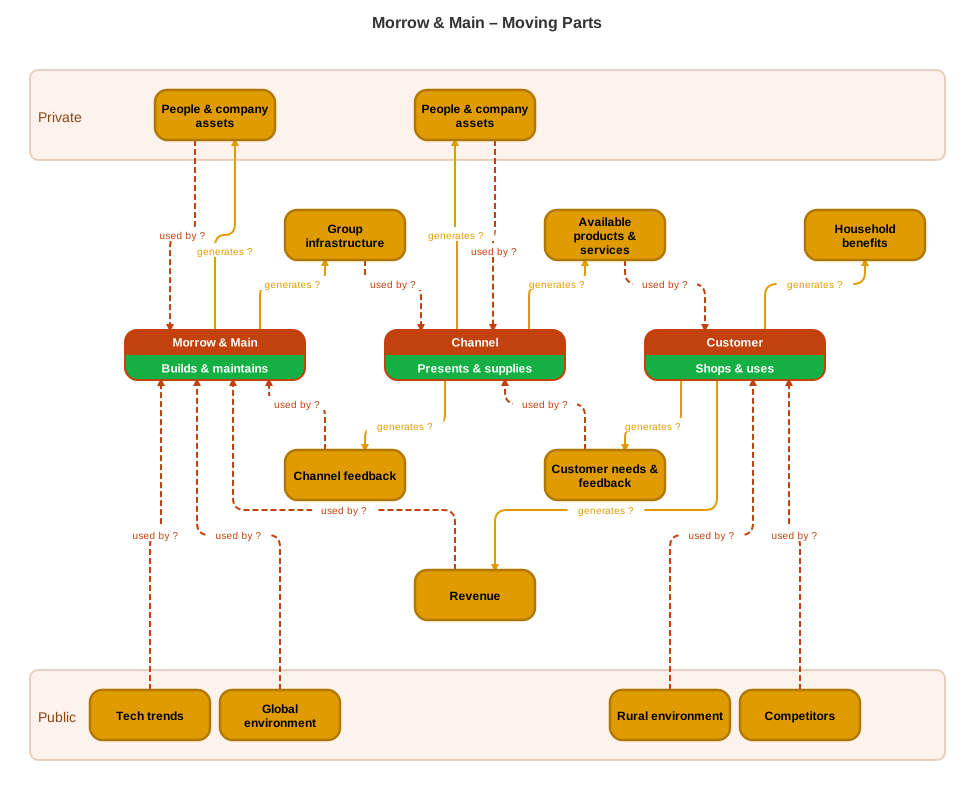
The underlying topology every scenario below is a variation of – company, channel, customer, and the feedback loops between them.
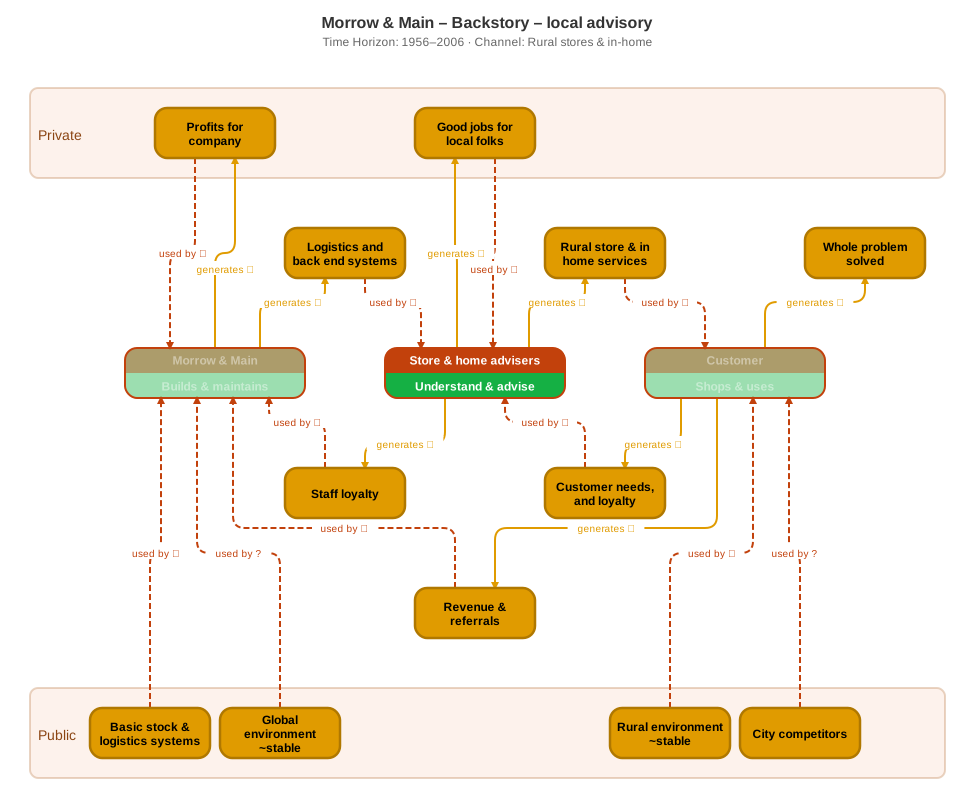
The original advisory model – one adviser owns a customer from assessment through to follow-up, and the loop closes personally.
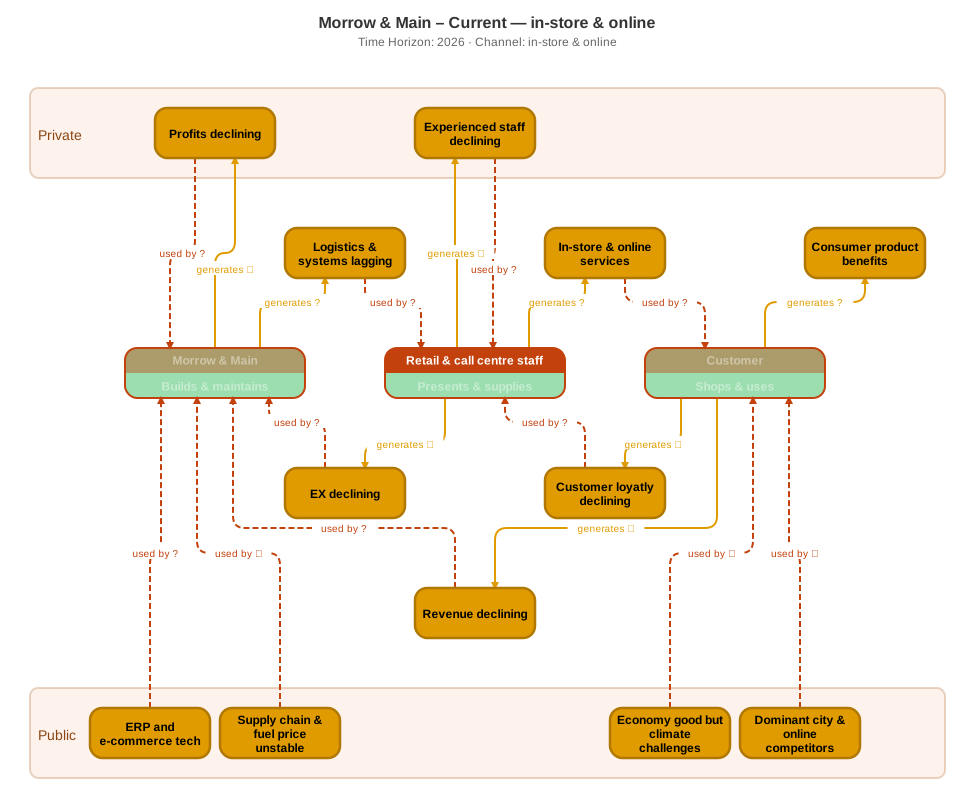
28 stores and an online shop. Profit, loyalty, and revenue are all declining, and the feedback loops that would explain why are noisy at best.
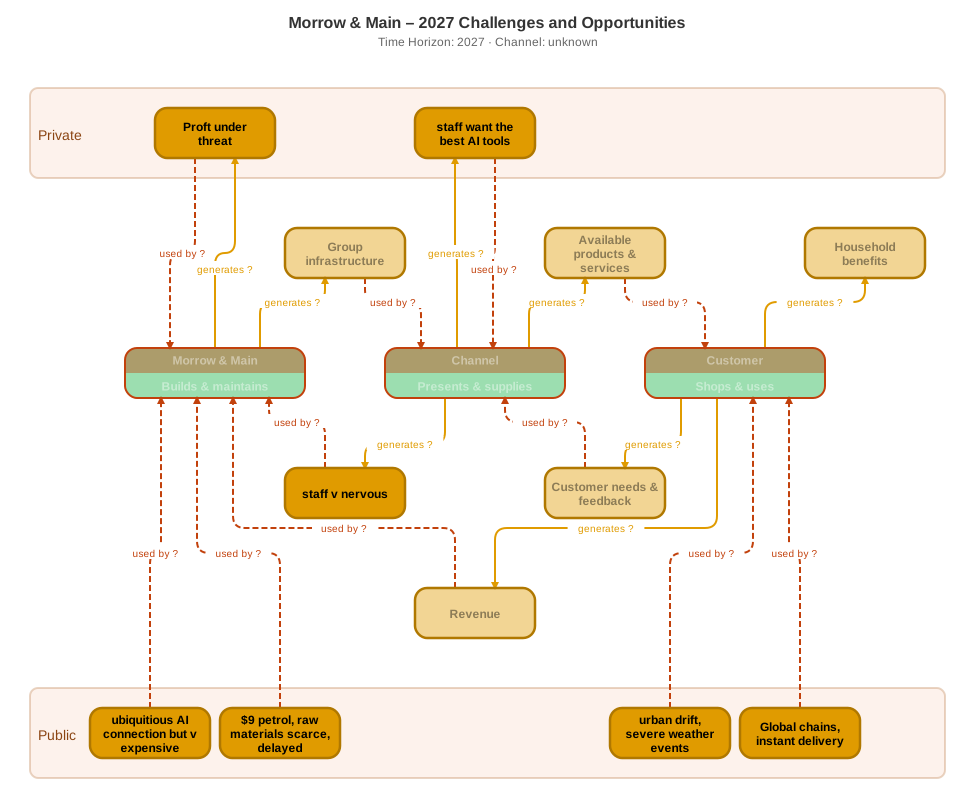
Conditions the audience supplied on the spot – global chains with instant delivery, $9 petrol, urban drift, AI that's everywhere but expensive, and a workforce that's nervous but wants the best tools.
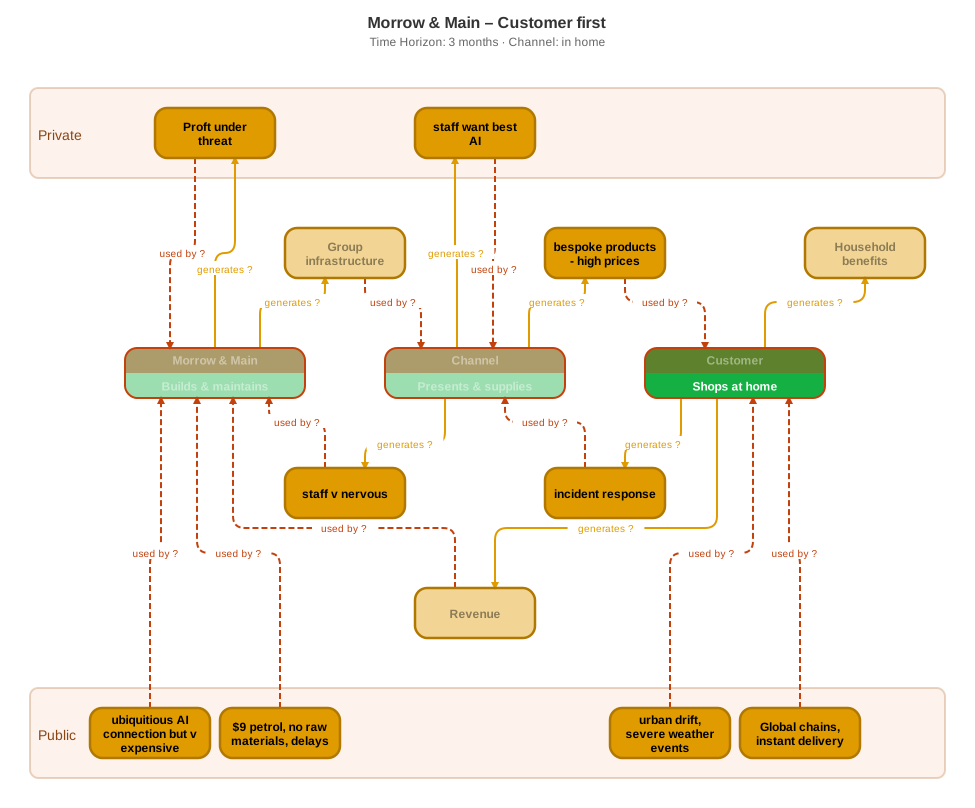
The leadership team's first bet – bespoke, higher-priced in-home service, three months, with a faster incident-response loop back from customers.
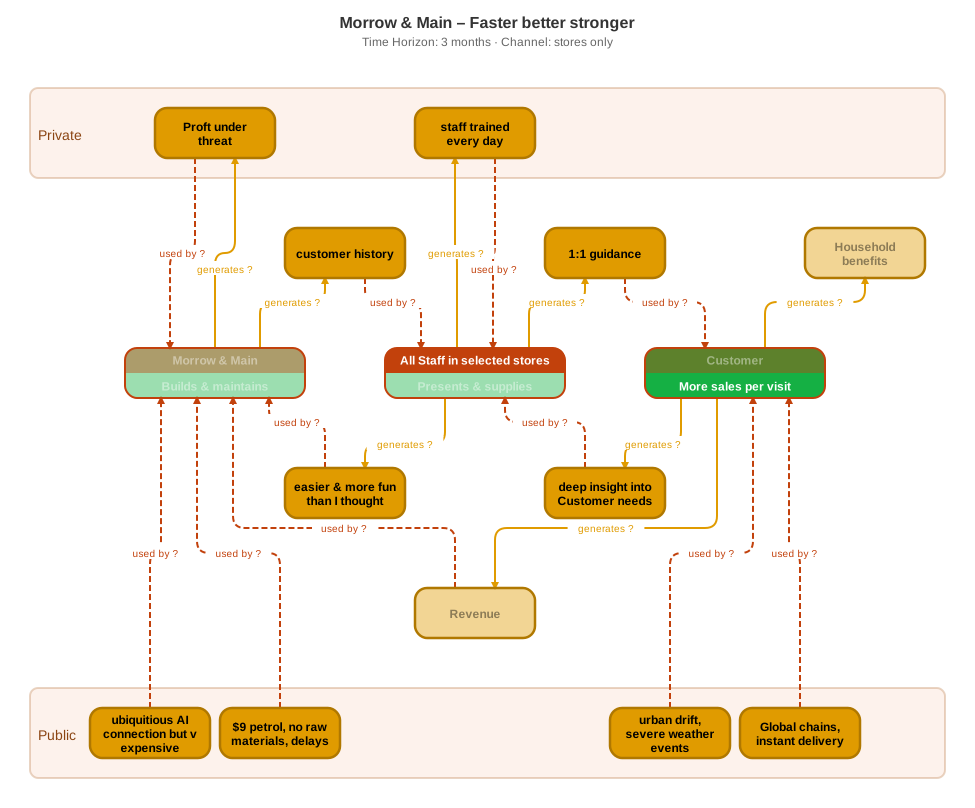
The second bet – daily-trained store staff giving 1:1 guidance, backed by customer history, aimed at more sales per visit.
That’s the argument I’d make from this: even a lo-fi experiment sketch, done under real pressure and in fifteen minutes, holds together when you’ve mapped the business and its context first – including how it changes over time. The map tells you where each experiment actually sits – which relationships it touches, what’s upstream of it, what’s outside anyone’s control – so a fast sketch is grounded in the real shape of the business rather than in whatever’s top of mind for the person proposing it.
So here’s my question for anyone running an AI pilot: how much clarity do you actually have about where your experiment sits in the business, what it connects to, and how it lines up with where you’re heading? That’s the clarity mapping gave this room in fifteen minutes.
Where this goes next: these are sketches, not finished experiments. The team still needs to refine each element, test how the things they’re proposing to change actually link together, and think through how each will land with the people who’ll feel it – customers, staff, and owners. And they need to get specific: exactly what they’ll measure, and what change in those measurements they’d expect to see within the experiment’s first stretch.
Fuller versions of the maps
Learn more about Randow maps, or browse more maps.
Want to make better strategy with your team?
A free Leadership Strategy Workshop helps your team move from getting stuck to making better strategy.